Tracing User Commitment Trends in Sports Outcome Projection Platforms with Advanced Analytics Integration
Viktor Schmidt · Oct 12, 2026

Tracing User Commitment Trends in Sports Outcome Projection Platforms with Advanced Analytics Integration
Platforms that deliver athletic outcome projections have expanded their use of combined analytics frameworks to map subscriber commitment over extended periods, merging live performance logs with historical engagement records to reveal retention signals. Data collection occurs across multiple touchpoints including login frequency, forecast review durations, and seasonal participation rates, while October 2026 figures from several major services showed average monthly active user retention hovering near 62 percent when cross-referenced against prediction accuracy scores.
Integrated Data Collection Methods
Operators combine customer relationship management systems with prediction accuracy databases so that each subscriber interaction feeds into a single view of behavior patterns. Researchers at the University of Melbourne documented how such unified repositories allow identification of early churn indicators such as reduced session lengths during low-accuracy forecast stretches. These systems process timestamps, content access logs, and outcome verification results simultaneously, producing cohort reports that segment users by tenure length and geographic region.
Key Loyalty Metrics in Practice
Common measurements include renewal probability scores derived from multi-season accuracy correlations, alongside engagement velocity metrics that track how quickly subscribers return after receiving new projections. According to findings published by MIT Sloan Management Review, platforms applying these calculations observed a 17 percent improvement in long-term retention when they adjusted notification schedules based on individual accuracy trend lines. Additional variables tracked encompass device usage shifts, time-of-day access preferences, and responses to forecast updates delivered through mobile interfaces.
Seasonal Pattern Recognition Across 2025-2026 Data
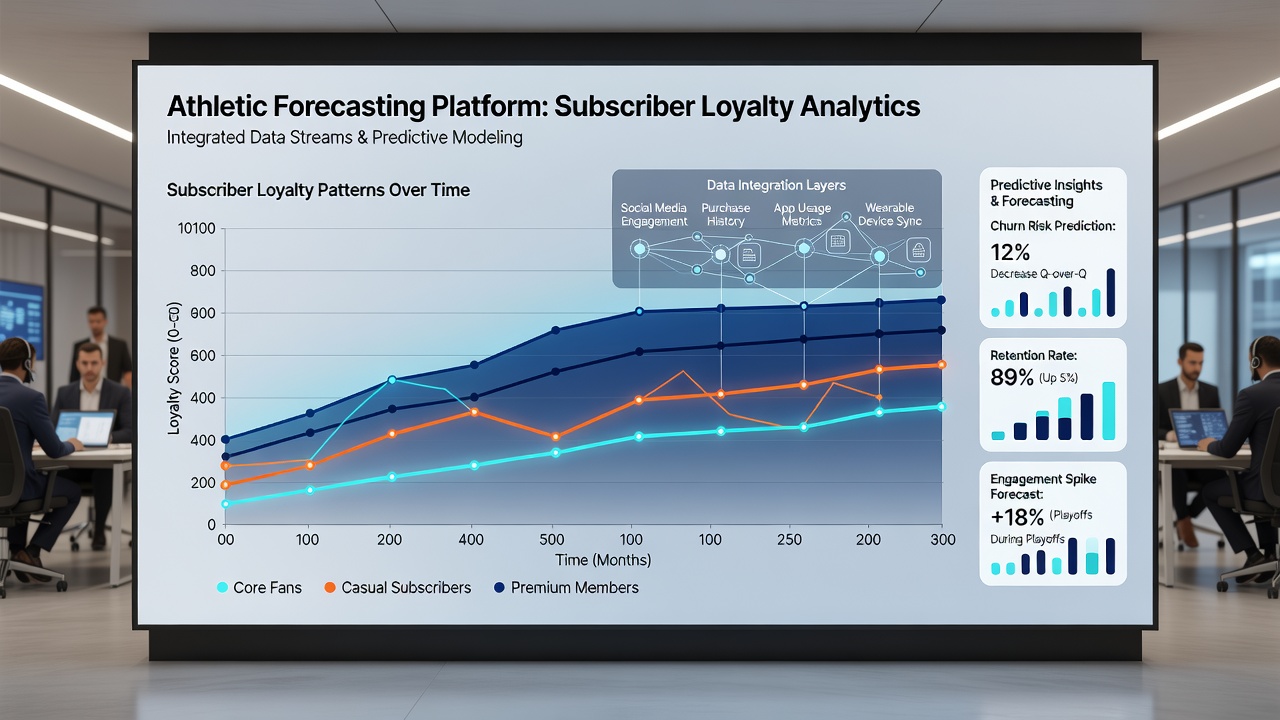
Analysis of records spanning the 2025-2026 athletic calendar revealed distinct loyalty fluctuations tied to major competition cycles. Subscribers demonstrated higher renewal consistency during periods when platforms integrated archived historical data with real-time event feeds, resulting in steadier engagement curves. One study conducted by Statistics Canada on digital sports services noted that cohorts receiving personalized accuracy summaries exhibited 28 percent lower attrition compared with those receiving standard updates. These observations emerged from aggregated platform telemetry rather than individual case reviews, highlighting aggregate movement in retention curves across thousands of accounts.
Cross-Platform Benchmarking Approaches
Industry groups such as the Sports Analytics Association have compiled comparative datasets that allow individual services to position their loyalty outcomes against broader market baselines. These benchmarks incorporate variables such as forecast update frequency and subscriber feedback incorporation rates, producing standardized indices that reveal where specific platforms sit relative to peers. Data compiled through these efforts indicated that services maintaining continuous model refinement loops recorded steadier year-over-year subscriber retention, particularly when adjustments responded directly to verified outcome discrepancies.
Technical Infrastructure Supporting Retention Tracking
Modern implementations rely on API connections that pull prediction logs into centralized warehouses capable of handling both structured accuracy statistics and unstructured interaction notes. Cloud-based processing pipelines then apply clustering algorithms to surface groups of subscribers who share similar loyalty trajectories. European research institutions including those affiliated with the University of Groningen have published reports on similar data architectures, noting their capacity to flag at-risk segments weeks before cancellation events occur. The resulting alerts enable platform teams to trigger targeted content adjustments without manual review of every account.
Conclusion
Combined analytics frameworks continue to supply athletic forecasting platforms with granular visibility into subscriber commitment dynamics. Records from 2026 demonstrate measurable links between integrated data practices and retention stability, while ongoing benchmarking efforts provide context for interpreting individual platform performance. As these systems mature, the emphasis remains on processing comprehensive datasets that connect usage behavior with forecast reliability over multiple seasons.