Exploring Record Maintenance Techniques in Athletic Outcome Projection Platforms
Viktor Schmidt · Aug 26, 2026

Exploring Record Maintenance Techniques in Athletic Outcome Projection Platforms
Record keeping systems in athletic forecasting platforms handle vast amounts of prediction data through structured logging protocols that capture every forecast entry along with associated timestamps, user identifiers, and outcome verification markers, while these frameworks ensure traceability from initial projection to final result confirmation. Observers note that such systems often integrate relational databases with blockchain elements in select implementations to create immutable audit trails, and this combination allows platforms to cross-reference historical predictions against official athletic results without manual intervention.
Core Components of Data Logging Frameworks
Platforms maintain primary databases that store forecast parameters including event details, predicted scores or outcomes, probability assignments, and source methodologies, and these entries connect to secondary verification modules that pull real-time or post-event data from athletic governing bodies. Researchers have documented how automated scripts run nightly comparisons during peak seasons, whereas manual audits occur quarterly to reconcile any discrepancies that automated processes flag for review. Data retention policies typically span five to seven years depending on jurisdictional requirements, and this duration supports both regulatory compliance and internal performance analysis.
Verification and Accuracy Tracking Mechanisms
Accuracy tracking begins with outcome ingestion pipelines that import final scores from official feeds, and platforms then apply matching algorithms to determine whether each forecast aligned with actual results. Those who've examined these systems report that partial credit systems sometimes apply for near-miss predictions in certain sports, while binary win-loss tallies dominate others. In August 2026 several platforms plan to roll out enhanced machine learning classifiers that categorize forecast types more granularly, which should refine how success rates calculate across different athletic disciplines.
External oversight comes from bodies such as the National Council on Problem Gambling that examines transparency features in prediction services, and industry reports from the European Gaming and Betting Association highlight standardized metrics for record integrity across member organizations. These sources provide benchmarks that platforms reference when updating their internal logging standards.
Storage Architecture and Security Protocols
Storage solutions combine cloud-based repositories with on-premise backups to guard against data loss, and encryption standards meet or exceed AES-256 requirements for all archived prediction records. Access controls limit employee visibility to aggregated datasets rather than individual user forecasts, while audit logs capture every query made against historical records. Observers note that multi-factor authentication protects administrative interfaces, and regular penetration testing occurs at least twice annually according to documented industry practices.
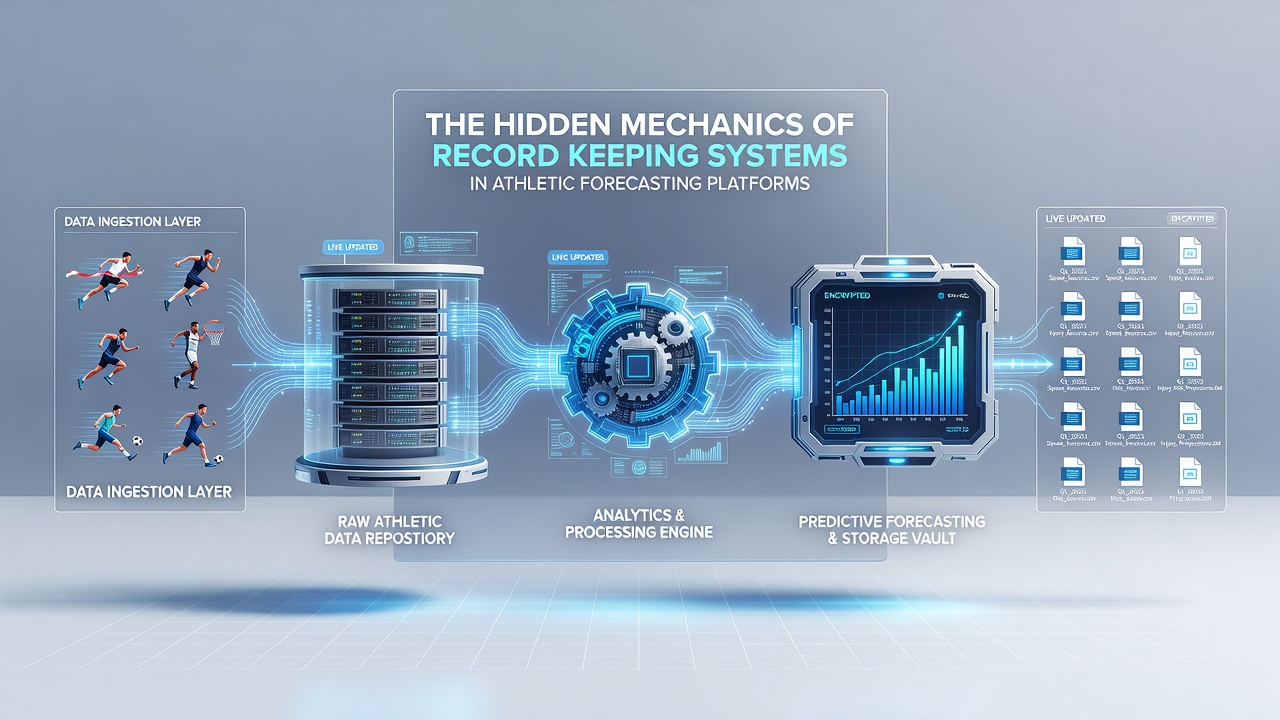
Scalability features allow systems to handle seasonal spikes in data volume during major athletic events such as international tournaments or championship series, and load balancing distributes incoming forecast submissions across multiple servers to prevent bottlenecks. Data compression techniques reduce storage footprints without compromising retrieval speeds, and this efficiency proves essential when platforms generate compliance reports for regulatory submissions.
Integration with External Data Sources
Forecasting platforms pull athletic results from feeds maintained by organizations including the International Olympic Committee and national sports federations, and these connections feed directly into record keeping modules that timestamp each verification event. Discrepancy resolution workflows activate when feed data conflicts with secondary sources, and such cases route to human reviewers who document their decisions within the system logs. Academic studies from institutions like the University of Sydney have analyzed how these integrations affect long-term record reliability across different sports categories.
Privacy frameworks align with regional regulations such as those enforced by the Office of the Privacy Commissioner of Canada, which require explicit consent mechanisms for storing user-linked prediction histories. Platforms therefore anonymize records during aggregate analysis phases while preserving identifiable data only for the periods mandated by applicable laws.
Conclusion
Record keeping systems in athletic forecasting platforms operate through layered architectures that combine automated logging, verification pipelines, secure storage, and regulatory alignments to maintain comprehensive histories of all predictions. These mechanics support both operational transparency and compliance needs, and continued refinements scheduled for 2026 indicate ongoing evolution in how platforms manage and protect their data assets.